 Get 5% cash back on your AWS bill from day one.Learn more →Get 5% cash back on your AWS bill from day one.Learn more →
The Cost of Compute 2026
How 100 CFOs are approaching cloud costs in 2026.
Cloud Infrastructure Accounting Standards
GAAP-aligned principles for cloud and AI cost classification.
Cloud Finance Learning Center
Practical guides for cloud-aware finance teams.
What 100 CFOs reveal about AI's impact on the P&L.

Report
The Cost of Compute 2026
What 100 CFOs revealed about cloud costs and how it impacts their P&Ls.
Get the reportMost companies announce funding they raised.
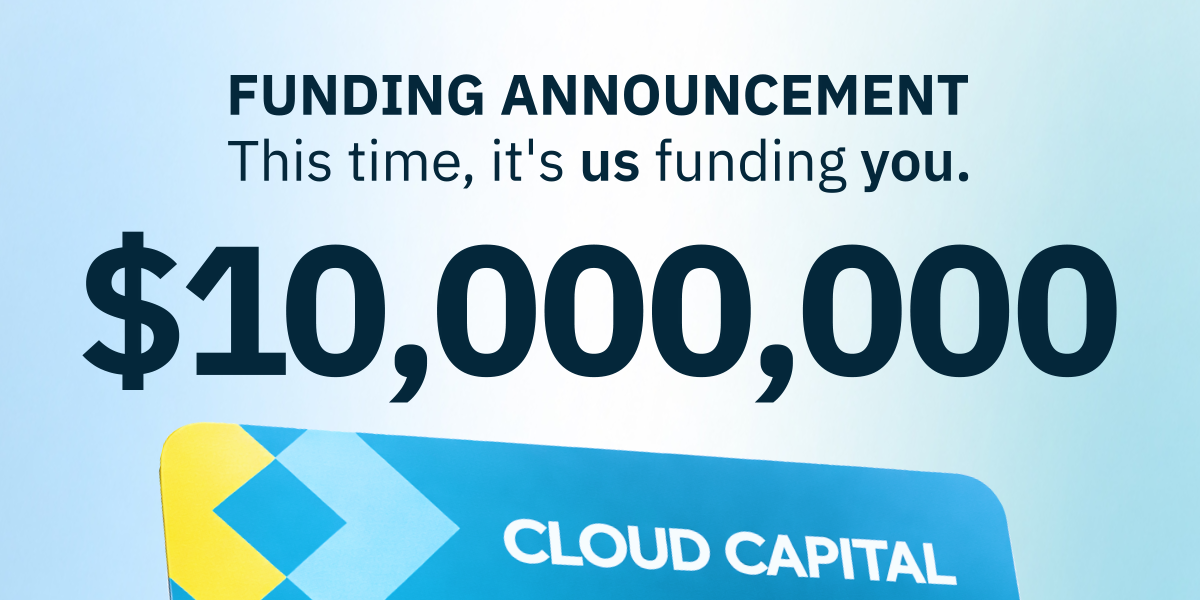
Today, Cloud Capital is announcing funding we're giving back: $10 million via our AWS Cashback program in 2026.
Every CFO is managing the same tension in 2026.
Your engineering organization needs to invest in AI infrastructure. Companies that integrate AI capabilities into their core product will have defensible advantages. Companies that don't risk becoming commoditized.
But AI infrastructure carries real costs. GPU credits for model training. Expanded compute capacity for inference workloads. AI engineering talent that commands premium compensation. And these investments need to happen now.
Meanwhile, your board expects you to extend runway and show a path to improved unit economics. Traditional solutions create new problems. Raising a bridge round dilutes existing shareholders. Cutting other investments introduces execution risk in proven channels.
What if there was a structural way to fund AI investments without any of these trade-offs?
AWS partners receive a discount on the services their customers consume. The standard playbook is straightforward: keep most or all of that margin. Use it to fund sales, support infrastructure, or simply improve profitability. That approach optimizes for partner economics, not customer economics.
We built our cashback program on a different premise. We give 5% back to every company that routes billing through us using AWS Billing Transfer. That cashback appears automatically every month as a credit. You pay the net amount. Nothing changes about how you run on AWS. You keep your account, your team, your AWS relationship.
For a company spending $50,000 per month on AWS, that generates $30,000 in cashback over the year. For a company at $100,000 per month, it's $60,000. That money can fund GPU credits, AI engineering hires, model training infrastructure, or simply improve your contribution margin. The choice is yours.
This is not promotional credit with expiration dates. It's not a commitment discount that requires long-term lock-in. It's structural margin pass-through that applies as long as you're billing through Cloud Capital, regardless of how many other companies participate in the program.
That structural difference matters for finance leaders managing multi-year forecasts.
The cashback scales with your AWS spend:
You can allocate that capital however your business needs it. Compute capacity for inference workloads. GPU credits for training runs. Or simply book it as a reduction in cloud infrastructure costs and improve your unit economics.
The flexibility matters because AI investment strategies vary by company stage, product architecture, and competitive positioning. A Series B company building a new AI-native feature has different capital allocation priorities than a Series D company optimizing existing AI workloads for cost efficiency. The cashback doesn't prescribe how you use it.
Moving your AWS billing to Cloud Capital follows a straightforward process using AWS Billing Transfer:
No migrations. No new tools. No engineering work required. You maintain your existing AWS account, your team structure, and your relationship with AWS. The only change is where the invoice originates and how much you pay.
For finance teams evaluating this decision, the relevant comparison is not between Cloud Capital and your current setup. It's between leaving margin on the table with your current partner or capturing it through cashback. The opportunity cost of the status quo is measurable.
Before opening this program publicly, we ran it invite-only for three months with companies facing exactly the AI investment challenge described above.
The model works. Customers received cashback credits every billing cycle. Finance teams booked them as reductions in cloud infrastructure costs or reallocated them to AI investments. Engineering teams continued operating normally with no disruption to development workflows.
We built confidence that this approach is sustainable at scale. Today, we're opening it to everyone.
The window for differentiated AI capabilities is narrowing. Companies that build AI into their core product architecture in 2026 will have advantages that are difficult to replicate later. Companies that delay because of capital constraints will find themselves responding to competitors rather than setting direction.
Finance leaders understand this dynamic. The question is not whether to invest in AI. The question is how to fund those investments without compromising runway or taking on dilutive capital.
Cloud Capital's cashback program provides a third option. Use margin economics from your existing AWS spend to create budget for AI infrastructure. No dilution. No extended lock-in commitments. No trade-offs with other strategic investments.
Learn more about Cloud Capital's AWS cashback program and apply at cloudcapital.co/cashback.
Questions about program mechanics, eligibility, or implementation? We're happy to walk through the details with your finance and engineering teams.
Report
Download The Cost of Compute 2026
Cloud Capital earns a share of the savings we generate for you. If you don't save, we don't get paid. Our incentives are fully aligned with yours. Ready to take control of your cloud spend?


