 Get 5% cash back on your AWS bill from day one.Learn more →Get 5% cash back on your AWS bill from day one.Learn more →
The Cost of Compute 2026
How 100 CFOs are approaching cloud costs in 2026.
Cloud Infrastructure Accounting Standards
GAAP-aligned principles for cloud and AI cost classification.
Cloud Finance Learning Center
Practical guides for cloud-aware finance teams.
What 100 CFOs reveal about AI's impact on the P&L.




Report
The Cost of Compute 2026
What 100 CFOs revealed about cloud costs and how it impacts their P&Ls.
Get the reportFor most finance leaders, cloud cost optimization sits in an awkward place: too big to ignore, too technical to own, and too risky to push hard without upsetting engineering. Until recently, that hesitation was justified because changing payer structure or centralizing billing meant real engineering work, security reviews, and implementation risk.
Recently, AWS shipped something that changes that equation.
It’s called AWS Billing Transfer, and it turns what used to be a risky, engineering-heavy project into a reversible, AWS-native billing configuration change. That opens the door for finance to treat cloud economics like any other major spend category—without triggering a months-long infrastructure project.
AWS Billing Transfer is designed for companies that run multiple AWS organizations and want one place to handle billing and cost management, or want to delegate that responsibility to a third party.
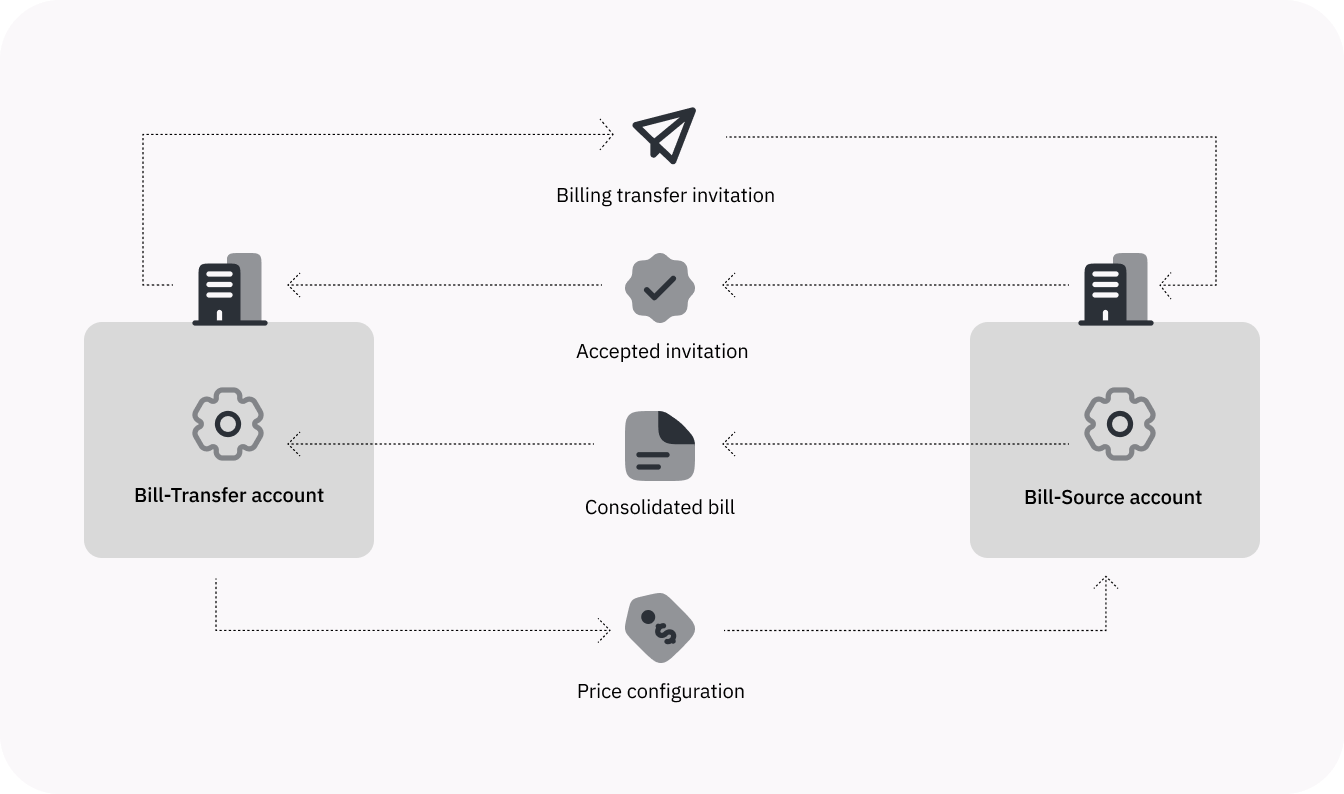
In simple terms, one management account sends a Billing Transfer invitation to another. If accepted, the inviting account becomes responsible for receiving and paying the other organization’s consolidated AWS bills starting on a specified date. Either party can withdraw the transfer, and future billing responsibility reverts to the original account.
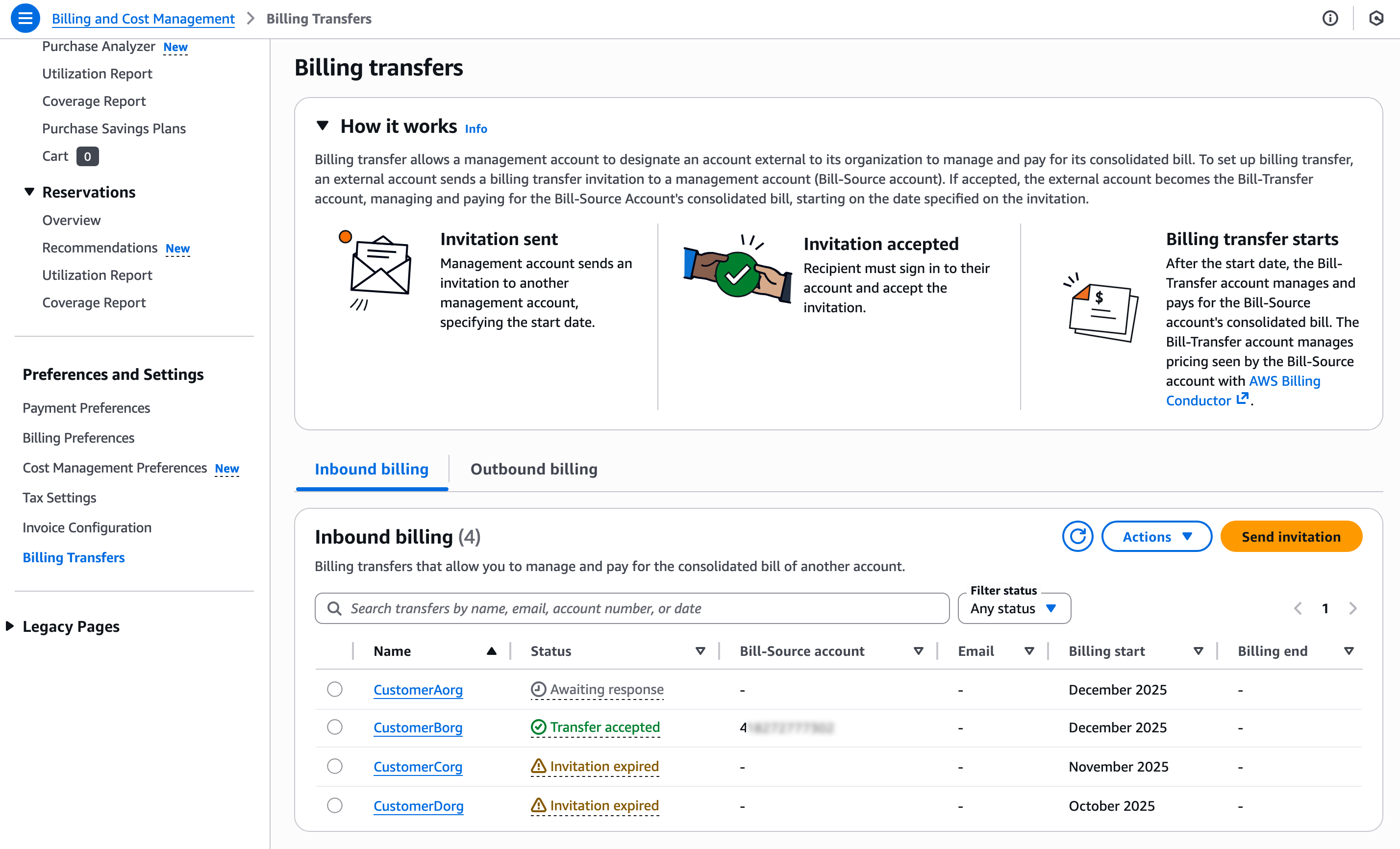
A few things matter to finance and risk owners:
You can think of Billing Transfer as a formal, reversible delegation of payment responsibility inside AWS. AWS’s launch post walks through the mechanics step-by-step. This piece is about what it unlocks for finance.
Billing Transfer resolves a fundamental tension in cloud cost governance: finance should be able to apply the same governance discipline to cloud spend that it applies to other major cost categories, but doing so has required engineering to sponsor what looks like an infrastructure project.
That tension kept most cloud optimization initiatives in a holding pattern. Finance could influence cloud spend indirectly through budget conversations and commitment approval processes, but couldn’t restructure how billing and payment responsibility flowed through the organization without triggering account migrations, security reviews, and org redesigns.
Billing Transfer changes the scope of what finance can evaluate and lead. Choosing who manages your AWS billing and commitments becomes a financial governance decision that happens within AWS’s native billing system. The mechanics are reversible. The infrastructure implications are zero. Engineering provides input on operational requirements without needing to sponsor a restructuring project.
The shift is subtle but significant: cloud cost optimization moves from an engineering project with finance oversight to a finance-led decision with engineering partnership. That’s the unlock.
Billing Transfer makes it mechanically safe and simple to change who pays your AWS bill. The real question is: what do you get in return for making that change?
If you transfer billing to Cloud Capital, you get 5% back on all AWS spend starting with the next billing period. That return is immediate and guaranteed, regardless of whether you pursue deeper optimization.
No long implementation, no disruption to engineering, no restructuring of your AWS accounts. You keep your existing AWS Organizations, IAM, and workloads exactly as they are. The only thing that changes is who pays the bill and how much you keep.
From there, you can choose to tap into what Cloud Capital does best:
To find out what 5% back now plus deeper optimization later could mean for your AWS budget, schedule a call with our team today.

Report
Download The Cost of Compute 2026
Cloud Capital earns a share of the savings we generate for you. If you don't save, we don't get paid. Our incentives are fully aligned with yours. Ready to take control of your cloud spend?


