 Get 5% cash back on your AWS bill from day one.Learn more →Get 5% cash back on your AWS bill from day one.Learn more →
The Cost of Compute 2026
How 100 CFOs are approaching cloud costs in 2026.
Cloud Infrastructure Accounting Standards
GAAP-aligned principles for cloud and AI cost classification.
Cloud Finance Learning Center
Practical guides for cloud-aware finance teams.
What 100 CFOs reveal about AI's impact on the P&L.


Report
The Cost of Compute 2026
What 100 CFOs revealed about cloud costs and how it impacts their P&Ls.
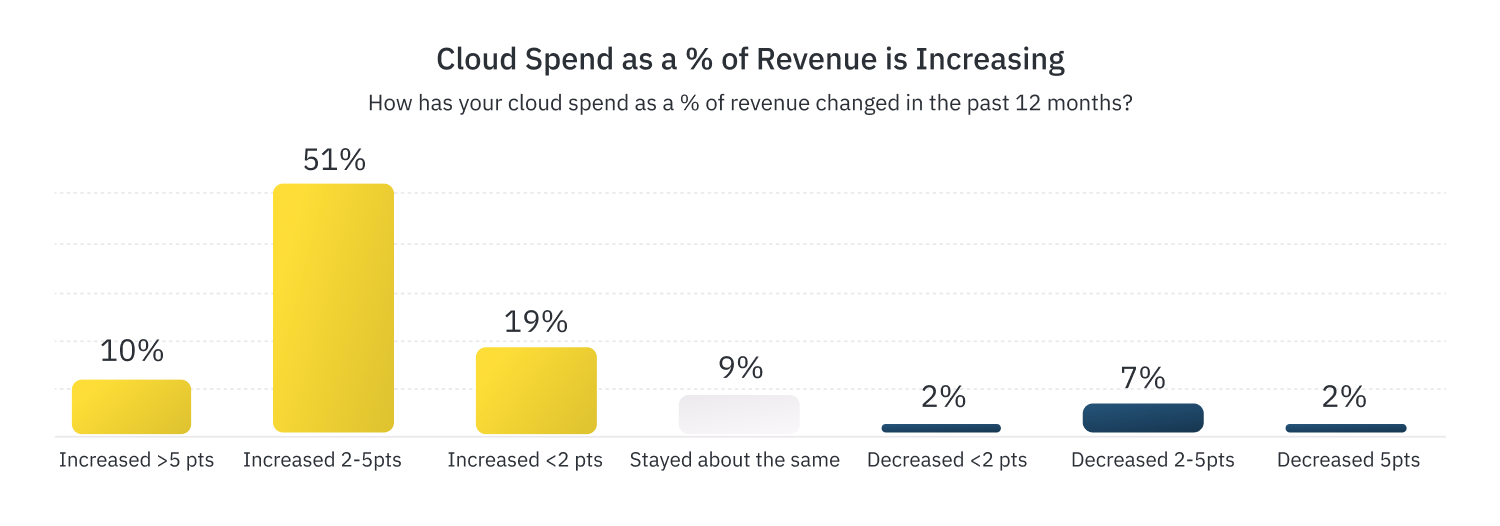
Get the reportAt 10–20% of revenue, cloud now represents the second-largest expense for many growth-stage SaaS companies. Finance tightly controls expenses at this scale. Headcount rarely deviates more than 2–3 percentage points from forecast. Fixed expenses show variance below 2%.
Yet cloud infrastructure fluctuates at 5–10% monthly variance for 74% of CFOs. This variance gap is structural, not episodic.
Download the full report The Cost of Compute (2026): What 100 CFOs Reveal About Cloud Infrastructure’s Impact on the P&L]
Virtually every dataset published on cloud infrastructure has surveyed engineers and presented insights through the engineering lens. We took a different approach.
We surveyed 100 CFOs and finance leaders to understand cloud costs as a financial control problem, not an operational efficiency problem. The results reveal a disconnect that engineering-centric research, by design, has not captured.
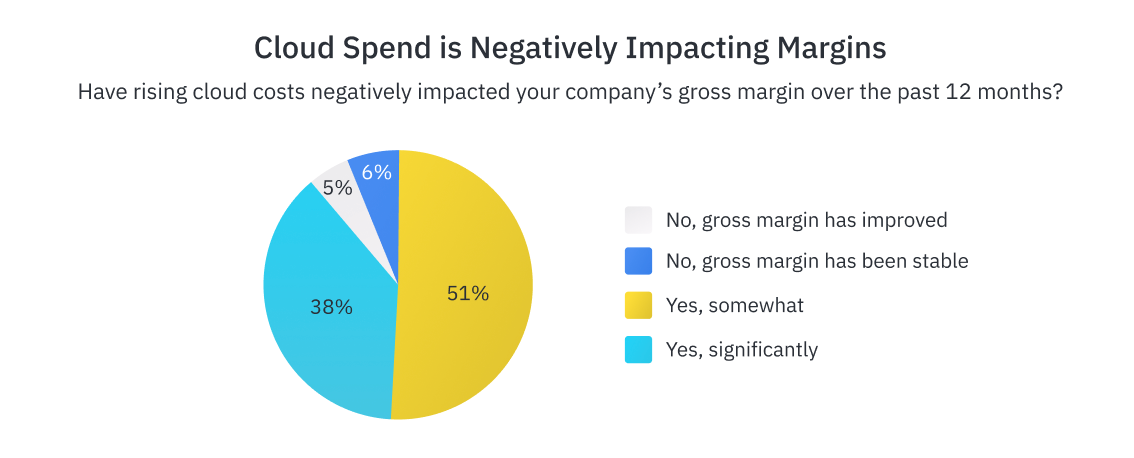
The financial consequence is now unmistakable: 89% of CFOs report that rising cloud costs have negatively impacted gross margins over the past 12 months. When a significant component of COGS moves unpredictably month to month, Finance loses the ability to defend margin projections with the precision boards expect.
Just over half of CFOs express high confidence in their cloud Cost of Goods Sold reporting accuracy. The traditional model (delegated ownership, reactive controls) cannot support an expense at this scale or volatility. Cloud has evolved from an operational expense managed by Engineering to a financial variable that determines margin trajectory.
AI workloads are accelerating this shift. AI and ML already account for 22% of total cloud spend, introducing cost patterns that behave fundamentally differently from traditional SaaS infrastructure. Training spikes, usage-driven inference, and experimentation noise introduce non-linear patterns that break the forecasting assumptions Finance relies on.
Organizations with major AI workloads are 2.6× more likely to report margin decline than those with moderate AI exposure. The challenge will intensify as AI’s share of cloud spend continues scaling.
Against this backdrop, our research set out to understand a simple question:
What separates organizations that forecast cloud spend with precision from those that experience persistent variance?
This research reveals the financial architecture behind cloud predictability (organizational ownership, operational systems, and forecasting cadence) and quantifies how each contributes to margin performance. By centering the research on Finance priorities rather than engineering metrics, we identified patterns that explain why some organizations achieve forecast precision while others do not.
The findings are clear:
74% of CFOs report monthly forecast variances that they wouldn’t tolerate for any other expense at comparable scale. Cloud’s materiality demands headcount-level rigor, yet it behaves with variance 2–5× higher than other major line items. Finance loses credibility on a material expense line it cannot reliably forecast or defend.
AI workloads now consume 22% of cloud spend and introduce non-linear cost patterns Finance has never had to forecast. Organizations with major AI exposure are 2.6× more likely to report margin decline. CFOs apply guardrails, but these controls have not improved predictability for the minority experiencing pressure.
When Finance gets involved, forecast predictability doubles. COGS confidence increases 50%. Joint Finance–Engineering ownership delivers peak performance: 39% achieve highly predictable forecasts and 77% report high COGS confidence. Organizational ownership is the strongest predictor of cloud cost control.
85% of highly predictable organizations have fully implemented governance. 65% maintain excellent visibility. 31% forecast monthly rather than quarterly. Each system independently lifts predictability; organizations that combine all three are overwhelmingly represented among the most predictable forecasters. The path to precision is operational.
Organizations with highly predictable forecasts improve margins at a much higher clip. Precision enables proactive optimization, confident investment decisions, and strategic trade-offs. These advantages compound quarter over quarter.
See all the benchmarks and cuts — Download the full report
Cloud’s financial weight is growing. Variance is growing with it. And AI is introducing new forms of volatility faster than most organizations can model. The question is no longer whether Finance should own cloud cost control. The question is whether organizations can afford for Finance not to.
The findings show the path forward with unusual clarity:
As 73% of CFOs prepare for cloud to consume a larger share of revenue next year, the stakes rise. Variance on a growing base is not linear. It accelerates. The organizations that build predictable systems now will absorb that growth without surrendering control or margin. The organizations that do not will see volatility spread into COGS and margins at increasing scale.
Finance must apply the same rigor to cloud that it applies to headcount and fixed expenses. 44% of CFOs have already made forecast accuracy a top priority for 2026. This research provides the blueprint for achieving it.
The time to act is now.

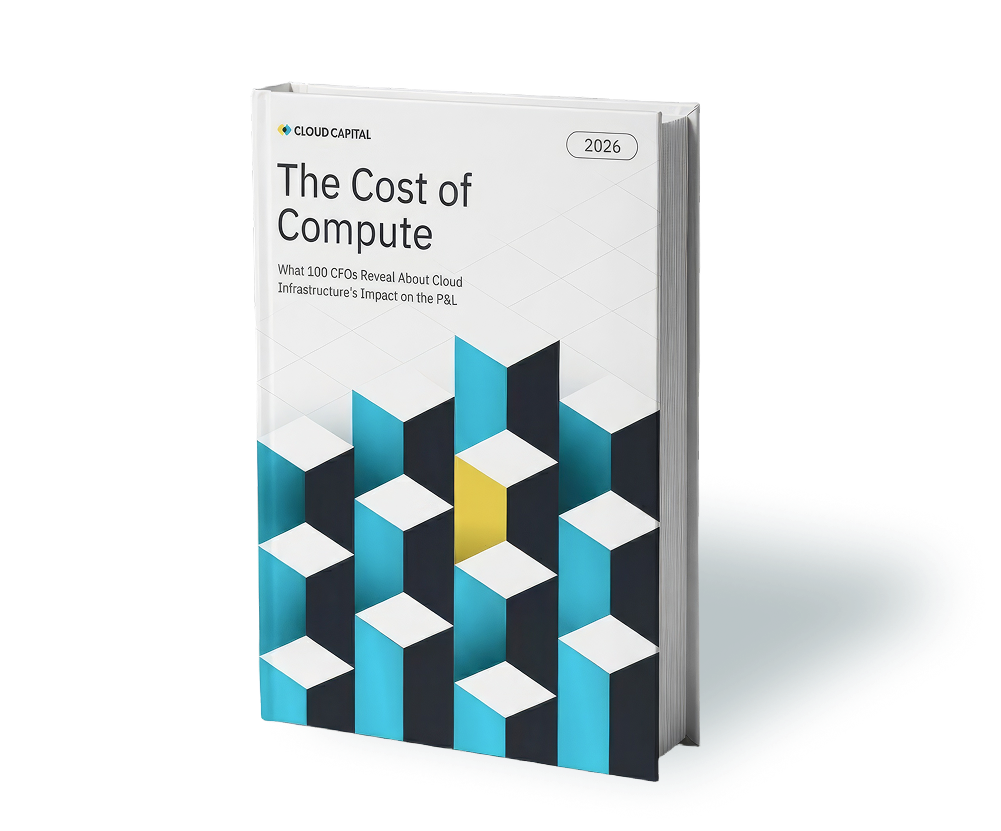
Report
Download The Cost of Compute 2026
Cloud Capital earns a share of the savings we generate for you. If you don't save, we don't get paid. Our incentives are fully aligned with yours. Ready to take control of your cloud spend?


